
Jack, how did you came up with the idea of Patreon?
Conte: Me and my wife Nataly Dawn have a band called Pomplamoose, we have been Youtube-creators for about a decade and a half. And about seven years ago she went off and signed a record deal and I started working on my solo-project Conte and the music video „Pedals“. That music video basically lead to the founding of Patreon.
In what way?
Conte: For the video I was building a replica of the „Star Wars“ Millennium Falcon cockpit in my studio at my house, I created an animatronic head that is actually singing the lyrics to the song, a 3D-printed hexapot robot… I spent over $10.000 on it, I maxed out two credit cards, I killed myself to make this video possible, wearing latex gloves for nineteen hours a day. So the video actually came together – but I drained my savings account for it.
Because you thought it would sell…
Conte: I knew I would upload the video on Youtube – but then I got that paycheck: $166 for one million views. So I thought about that payment and the way creative people are valued in the world – and it made me sick. This system that we designed and deployed globally to help creative people make a living: It’s not enough and it’s completely broken. It doesn’t value the creative people that fill the world, fill the internet with all the stuff that we read, watch and listen to. And it’s not just youtubers and musicians, it’s also journalists, bloggers and podcasters. It’s educational videos. It’s anybody who puts content on the web and wants to make a living from it.
I know the paradigm that exists, of the starving artist. But this is not a starving artist problem, this is different. When someone uploads a video, a million people see it and then Google pays $150 ad revenue to the creator for his work – it’s totally messed up!
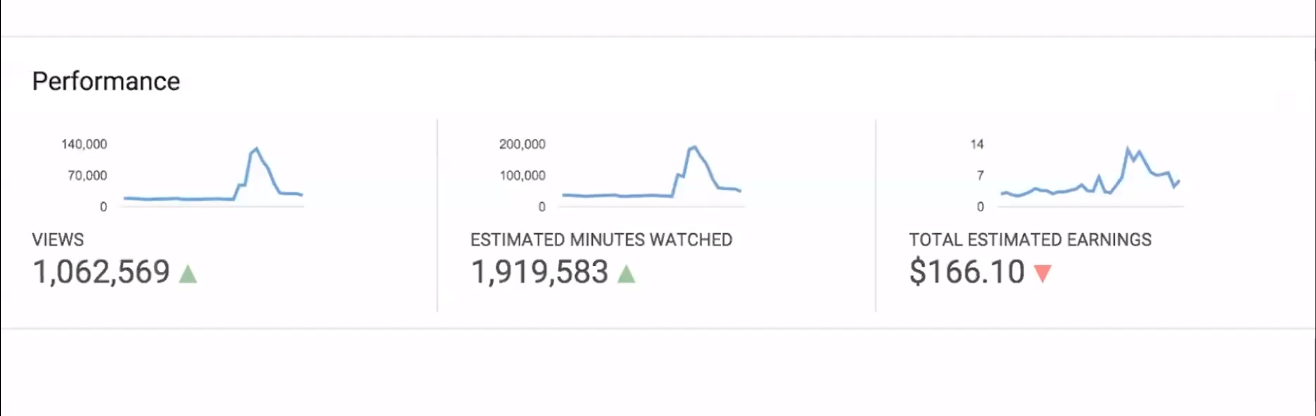
Screenshot: Youtube-earnings of music video „Pedals“ in 2013, after 1 Million Clicks
So you came up with a special model of crowdfunding.
Conte: The idea was very simple: If you give one Dollar to me as an artist, you’ll get some behind-the-scenes-content: blog posts, an extra livestream once a month, extra photos for an exclusive community. My co-founder Sam Yam, actually my roommate back then, built the whole thing in about two and half months. And then, literally within two weeks after launching the site I was making over $5000 a month – instead of 166. That’s how Patreon started.
The problem that we try to solve is: How can we help creators actually make a fair living and get paid what they’re worth instead of the minimum amount that tech companies can get away with?
But let’s say you also have the opportunity to get a traditional record deal – why should an artist choose Patreon instead of the traditional record label deal?
Conte: First, I am not anti record label, it depends on the artist. If you’re an artist who wants to own your mastertapes, understand your business and make sure that people aren’t taking most of your money, if you want to keep creative control, if you want to build your own team and have a long career that’s not based on just a hit-single but based on the output of your work over a lifetime, then I think Patreon is a really great solution. At the end of the day it comes down to creative freedom and financial freedom. Which is not really something that you get when you sign a publishing deal or record deal. Because they have control at that point. If you don’t want that, if you want to have creative and financial control then it’s better to finance your own work.
There are a couple of other social payment platforms now on the web…
Conte: Yes, there’s a bunch of them out there, like Substack, Steady and others. With Patreon we started seven years ago and we have quite a lead time, in terms of our competitive advantage. We’ve had a long time working on this problem and we figured out a lot of the complexity associated with that.
How did your figures develop since the Corona pandemic started in March 2020?
Conte: Within the context of Corona virus and the pandemic basically all of the tours in the world have been canceled, most of the gatherings of a lot of people have been canceled, concerts, shows etc. So folks are looking for a digital version of that income stream. There are some bands that I saw recently on Patreon that had $300.000 of touring income planned this year. An artist like Ben Folds for example or the band Doomtree. Also podcasters have started touring with live shows, before the pandemic, and their shows now have been canceled.
Since mid March until May we have seen around 70.000 new creators launched on Patreon, music launches on Patreon are up about 200% month over month. Also categories like video, podcast, writing, journalism are up from 50 to 90%. So the increase now is between double to triple of what we’ve seen usually.
We also see it on the side of the ‚patrons‘. There is a 25% average daily growth, compared to our baseline since February. And we see a 75% increase in value of what current patrons are paying on Patreon. So, across the board we are seeing more activity happening on the platform.
How do you explain the increase of patrons‘ payments? Because the crisis does also effect those who donate money to artists, podcasts etc…
Conte: I think it comes down to two key things: Patrons, the people who want to support the arts, who want to support creators – it’s a self selecting group of awesome people. They are caring, they have big hearts, they want to vote with their dollars.
Sounds almost romantic…
Conte: There is an emotional, psychological component of being a patron or member, that makes the tie a little bit stronger than just something transactional. When you’re a member it’s almost like a piece of your identity. You say: I like this podcast, I like this creator, I identify with this, I think the world needs to hear this, I’m voting for more of that in the world.
How many patrons are registered right now?
Conte: There are over 4 million patrons and those patrons have paid already over $1 billion to creators since we started in 2013. They paid creators $500 million in 2019 and they spend around $12 a month.
What can you tell artists, who are still unknown, what are the most important things to keep in mind, using Patreon?
Conte: I think there are two important things for an artist career. The first is audience building, finding something that resonates with an audience. And step two: How do I transform this into a business so that I can keep doing it and quit my job?
Both steps are important, but a lot of folks try to skip immediately to step two, when they should focus on step one.
But what do you recommend to newcomers?
Conte: As CEO of Patreon I probably shouldn’t say this, but we are not good at this yet, we are not really an audience building platform yet. If a person wants to launch a Patreon page without having found an audience yet, it wouldn’t have much success. So on that we still have some work to do.
The problem that we were solving in the last years is: What do you do, when you already got this following but you’re not getting paid?
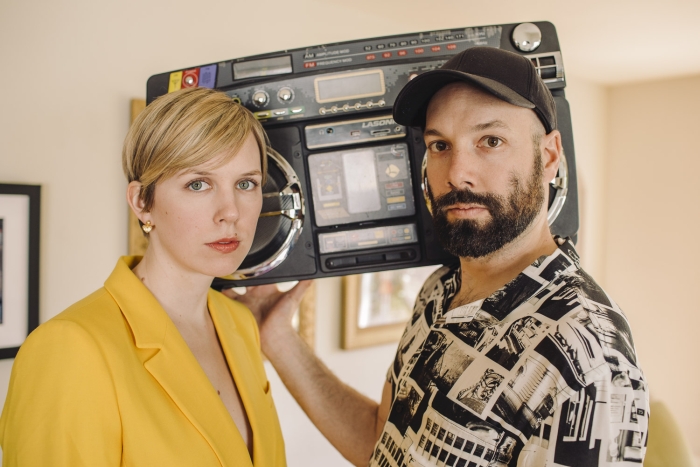
Nataly Dawn and Jack Conte are Pomplamoose © Patreon
There is also a program called Patreon Capital, where you give loans to artists. In an interview you said you can predict quite exactly how much money an artist will earn “in the next months”. How is that possible, considering that success of art isn’t really predictable?
Conte: As an artist I can tell you: Money comes in chunks. You create something, somebody pays you for and you have no idea if that money will last for three, six or eighteen months. You can’t budget, you can’t plan, you don’t have a predictable monthly income – you have to just save and ration.
Now the advantage of Patreon is, that it is very predictable, because it’s a subscription recurring payment, it is about the same every month. On average, artists grow their earnings a little bit every month. And that means that artists know, how much money they’re gonna make in 30 days but also in 60 or 90 days, more or less. They’re looking forward to that paycheck and its gonna come, unless a huge portion of their patron base deletes their pledge – which doesn’t ever happen.
To get a loan from the Patreon Capital program you have to be a Patreon creator, this way we’re able to see the expected income of the next months. And then you can ask to get an advance of the next four months earnings for example.
Recently you have announced an expansion of Patreon, focusing on Europe. Is this plan on hold due to Corona crisis?
Conte: With a technology company like Patreon a lot of the work is gonna be digital: currency conversion, language translation, software, localization. This work we are doing now and continue to do despite the pandemic. Only the community building, hanging out with creators, bringing patrons and creators together etc. – that unfortunately is on hold.
You started as a musician but now you are also a businessman. How much time do you still have for making music?
Conte: I’m a businessman but it’s not like I ditched my creative past and now I am a tech-guy. With my band Pomplamoose we still release one music video every week, the same with my other band Scary Pockets, so that music career is still very active.
But I’m fulltime working on Patreon, that’s really my focus, because there are now 150.000 creators who needed to be my focus. They trusted us, I owe them my time, my energy and my best effort. But on weekends I work also on music. And to be honest: The two bands, because they are are now making money on the web, both of them are bringing more money than I make as the CEO of Patreon.
How much is your income with Pomplamoose?
Conte: With Pamplamoose we have 3,200 Patrons and we earn about $16,500 a month.
How many creators do you support yourself?
Conte: Around 30 or 40.
What is the thing that you are most proud of concerning Patreon?
Conte: Sending paychecks to creative people, letting them quit their jobs and make a living. That to me is the greatest gift I could imagine. The best feeling I ever had in my whole life.